
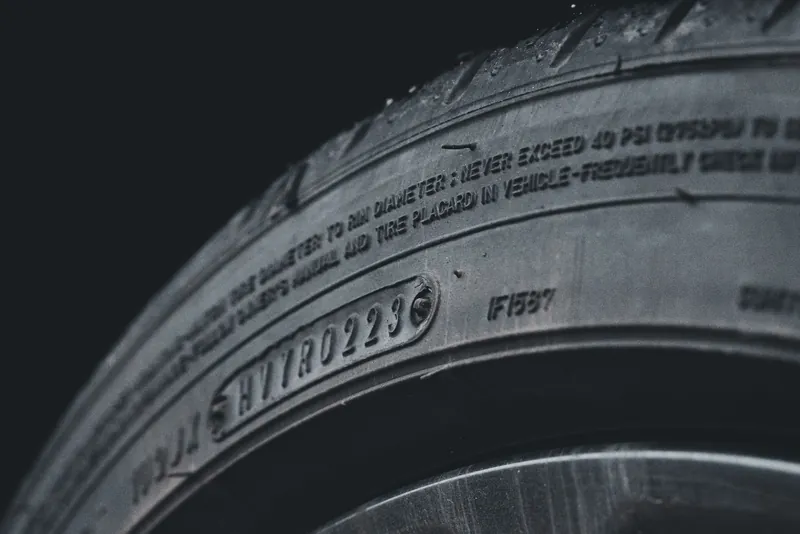
Read the tire grades when you want to compare treadwear, wet braking and heat resistance. Read the last four digits of the full DOT Tire Identification Number when you want to know when a tire was made. If you’re shopping for replacements, start with the tire size specified for your vehicle, then compare the markings on the tires you’re considering. NHTSA TireWise
Read each grade on its own scale
The U.S. Uniform Tire Quality Grading system applies to many new passenger-car tires. Defined winter-type snow tires, temporary spares and limited-production tires are among the exceptions. If a tire has no grades, check whether it falls under an exception before trying to compare it with a graded tire. Federal tire grading standard
- Treadwear uses a number. A test tire gets a grade relative to a control tire graded 100. Treat it as a comparison under test conditions and use it to compare grades, keeping your own replacement schedule separate. NHTSA treadwear grades
- Traction uses AA, A, B or C, from highest to lowest. The grade measures straight-line braking on wet pavement under controlled conditions. Cornering and hydroplaning fall outside that test. Federal traction grading standard
- Temperature uses A, B or C, with A representing the greatest resistance to heat under the test. A tire marked traction A and temperature A has two separate ratings, one for wet braking and one for heat resistance. NHTSA temperature grades
Read the production week and year
Find the full Tire Identification Number on the sidewall and read its final four digits in two pairs. The first pair gives the production week and the second gives the year. For example, a date code ending in 1823 means the tire was made in the 18th week of 2023. Record the date for the individual tire. If you can’t see the full marking from outside the vehicle, it may be on the opposite side. Ask a tire shop to read it if you can’t see it from a safe position. NHTSA tire age guidance
Check the size before comparing candidates
Use the owner’s manual or the vehicle’s Tire and Loading Information label to identify the specified size. If you’re comparing two candidates, write down the size, each grade and the date code in separate columns. That keeps a strong result in one test from standing in for the other information you need. NHTSA tire buying guidance
This guide is general information, not professional advice. Vehicles differ by model, year and trim. Check your owner's manual first, and use a qualified mechanic if you are unsure. You do this work at your own risk.