
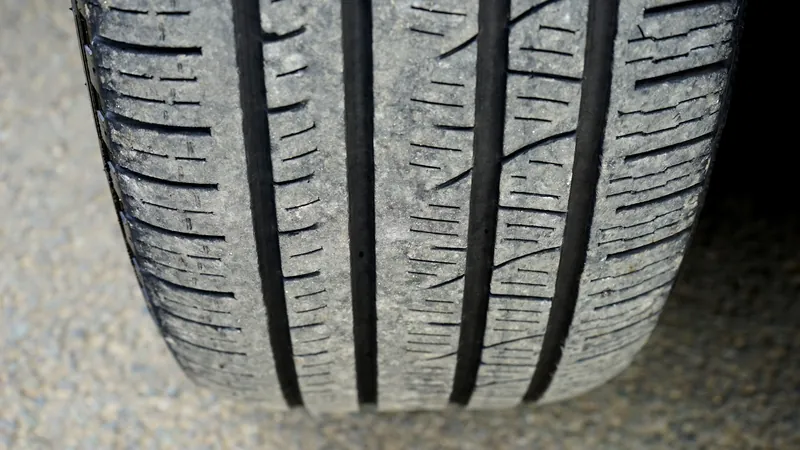
With your vehicle parked, look for shallow tread, uneven wear and visible damage on each tire. Tread helps the tire grip the road, especially in wet or icy conditions. NHTSA recommends a tread check at least monthly and replacement when tread wears down to 2/32 inch. Have a tire professional look at problems you spot or areas you can’t see easily. NHTSA TireWise
Look for the wear bars
Look into an accessible groove between the main tread blocks. The raised strips crossing the grooves are wear bars. Compare the surface of the tread beside a bar with the top of the bar. Once they’re level, it’s time to replace the tire. Keep track of which tire you checked so a worn spot on one tire doesn’t get lost in a general impression of the set. NHTSA tread guidance
You can also do a quick check with a penny. Put it into a tread groove with Lincoln’s head pointing down and his face toward you. If you can see the top of his head above the tread, NHTSA advises replacing the tire. If you’re unsure where the tread meets the wear bar or what the penny shows, ask a tire shop to measure the depth. NHTSA penny test
Look at the wear pattern and the sidewall
Compare the visible tread across the width of the tire. If one area looks more worn than another, note where you see it and have the tire inspected. The useful detail to share with the shop is where the pattern appears, such as near an edge or toward the center. Ask the shop to assess the cause. NHTSA guidance on uneven tread
Look for cuts, cracks or bulges in the visible rubber. If you spot one, stop using that tire and ask a tire professional how to arrange service. A good tread reading in the same area leaves the visible damage unresolved. NHTSA tire damage guidance
Tell the shop what changed
If you’ve noticed new tire noise or vibration while driving, report it even if the visible tread looks even. Write down when it started and which tire, if any, has an obvious wear pattern. A parked check gives you observations to take to a tire professional, who can examine the parts you can’t see and assess the symptoms. NHTSA tire performance guidance
This guide is general information, not professional advice. Vehicles differ by model, year and trim. Check your owner's manual first, and use a qualified mechanic if you are unsure. You do this work at your own risk.