
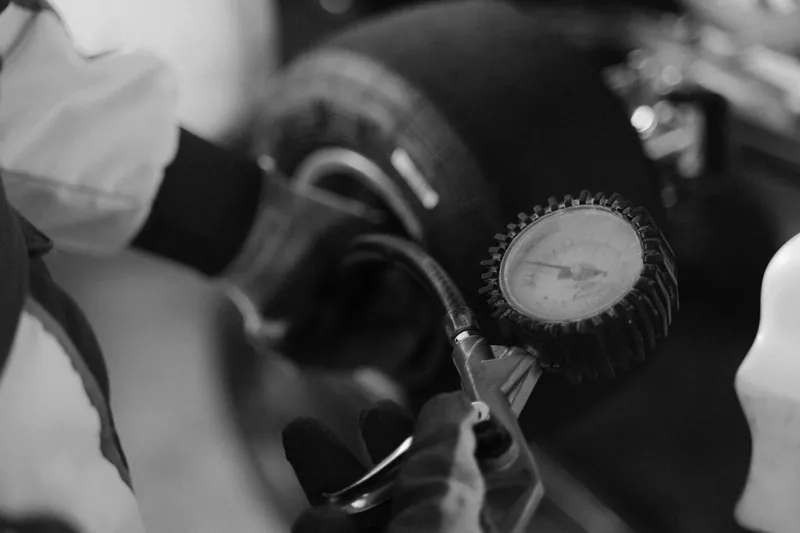
For a passenger car or light truck, find the recommended cold tire pressure on the vehicle’s tire placard or in its owner’s manual. Check that you are looking at the instructions for your exact vehicle, then compare the recommendation with a cold reading.
Read the vehicle’s recommendation
Start at the driver’s door opening, a common location for the tire placard. Look for the manufacturer’s recommended inflation pressures and note which value applies to each tire position. If the label or manual gives different front and rear values, write them down separately. Use the owner's manual to clarify an unfamiliar label.
The maximum pressure molded into a tire’s sidewall tells you about the tire. The placard or manual tells you what the vehicle manufacturer recommends for that vehicle. Use the vehicle guidance as your reference. Check the spare against its own instructions if your vehicle carries one.
Take the cold reading before driving
Check after the vehicle has been parked for at least three hours. Comparing a warm reading with a cold specification can give you the wrong impression about what the tire needs. A check before your first drive gives you a repeatable starting point. When the outside temperature drops, tire pressure can fall, so recheck after a seasonal temperature change.
Know when to ask for help
If the placard is unreadable, the wheel or tire setup has changed, or a tire repeatedly loses pressure, ask a qualified mechanic to identify the applicable specification or inspect the tire. Bring the vehicle details and your readings so the mechanic can see what changed.
This guide is general information, not professional advice. Vehicles differ by model, year and trim. Check your owner's manual first, and use a qualified mechanic if you are unsure. You do this work at your own risk.