
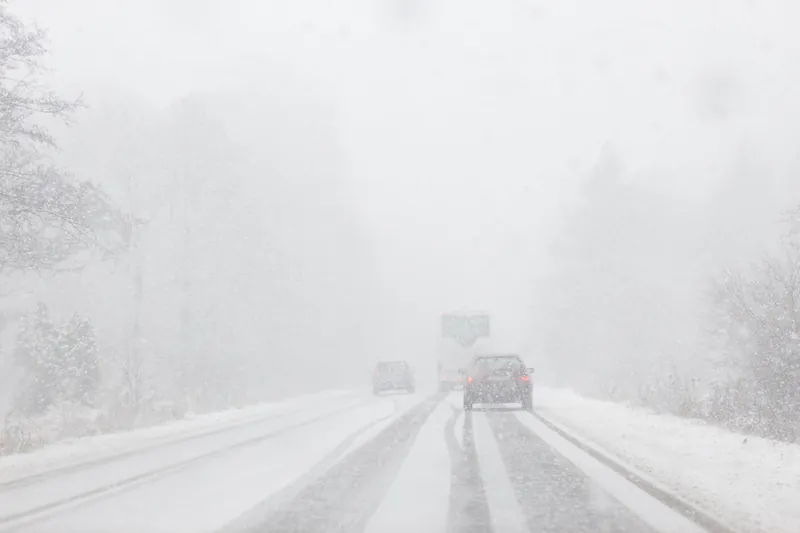
If a snow squall warning covers the area where you plan to drive, delay departure until the squall has passed. If you are already on the highway, take the next opportunity to exit safely. A squall can quickly cut visibility and leave the road icy even when it produces little snow accumulation. NWS snow squall safety guidance, NWS State College snow squall FAQ
A short burst can make the highway hazardous
Snow squalls bring a brief burst of heavy snow and gusty winds, often lasting less than an hour. Visibility can fall suddenly and falling temperatures can turn a wet road icy within minutes. If your plan depends on a stretch of highway, pay attention to the short period when the squall could cross it. A squall can occur outside a larger winter storm, and its impact on traffic can be severe despite relatively light total accumulation. NWS snow squall safety guidance, NWS Spokane explanation of flash freezes
Wait before you drive into the affected area
Snow squall warnings cover specific areas and are issued on short notice. Look up the latest forecast and warnings before starting, including for the locations you expect to reach later in the drive. The most dangerous squalls trigger a phone alert. If you receive one while you are stopped for fuel, compare the warning area with both your current location and the stretch of highway you are about to drive. If a warning covers the next leg, wait before entering the affected area until the squall passes. NWS snow squall safety guidance, NWS State College snow squall FAQ
After the squall, check official road conditions for the affected segment before you resume travel. The Federal Highway Administration’s directory lists traffic and road closure resources by state. If you are waiting at a stop along the way, check the next highway segment and the road you will use to get back to it. If you planned to cross a state line during the squall, check both states’ road reports for your route before you set out again. FHWA traffic and road closure directory
If you cannot exit in time, reduce speed and increase your following distance
Slow down gradually, avoid hard braking and give the vehicle ahead more room. Use your headlights and hazard lights and stay in your lane. On an icy road, slamming on the brakes can make you lose control and contribute to a chain-reaction crash. The National Weather Service advises exiting at the next safe opportunity when a warning arrives while you are driving. NWS snow squall safety guidance, NWS State College snow squall FAQ