
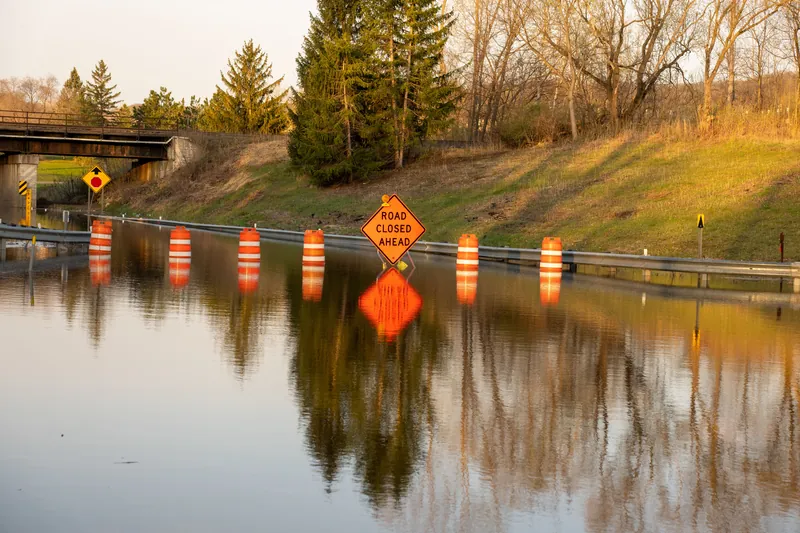
If water covers the road, turn around. Honor every closure sign and barricade, even when the road beyond looks passable. If flooding affects your route, look up current closures and use an open detour that avoids flooded roads, or wait until conditions improve. NWS flood safety guidance, NWS flood travel guidance
Turn back when you reach water or a barricade
Floodwater can be deeper than it looks, and it can hide a washed-out road surface. Water levels and the speed of the flow can change quickly. Swift water can sweep a vehicle away in seconds. Those are reasons to turn back at a flooded crossing as soon as you encounter it, including when you are driving a truck or SUV. NWS flood safety guidance
An open-looking gap beside a barricade changes nothing about the closure. Turn back and keep out of the water on foot, too. At night, be especially cautious because flood hazards are harder to see. If a flash flood warning covers your area, the weather service advises driving only if absolutely necessary. NWS flash flood warning safety rules, NWS flood safety guidance
Use the road agency’s closure information for your detour
Look up the road, direction of travel and the stretch affected before you pick another route. If your trip crosses a state line, check the road information for both states. The Federal Highway Administration’s directory takes you to traffic and closure resources by state. Use the road agency’s posted detour if one is available, and honor any closures you encounter along the way. FHWA traffic and road closure directory, NWS guidance for after a flood
For example, if the closure cuts off the last few miles to your destination, check the approaches from the other direction before setting out on a detour. Look up the roads that connect the detour to your destination as well as the main highway. If you lack an open way in, hold the trip and check again later. The weather service advises delaying travel until conditions improve. NWS flood travel guidance
Check the route again after the rain
Keep following local updates and heed closure and caution signs after the flood, including signs on the approaches to the closure. When you make a fresh travel decision, look up the affected stretch again and check any changes to the detour. Before heading back, look up the return leg as well, especially if it goes through the same area hours later. Leave enough flexibility in your itinerary to wait for an open route. NWS guidance for after a flood