
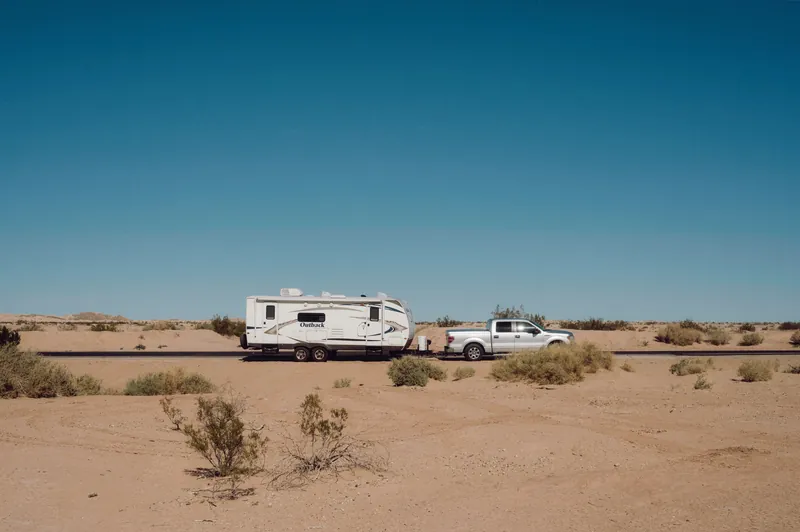
If high winds are forecast along your route, consider rescheduling your trailer or RV trip. A strong gust can overturn a camper or trailer, even when it is parked. Check the forecast for the hours you expect to drive, and pick a sturdy building where you could take shelter if a warning comes through while you are traveling. NWS guidance for recreational vehicles, NWS high wind safety guidance
Check where your route crosses bridges or overpasses
Include bridges and overpasses when checking forecasts along your route. The National Weather Service says those crossings can be especially hazardous when the wind is very strong and advises avoiding them when possible. Compare the forecast for the crossing with the time you expect to reach it, then see whether an alternate route can avoid it. NWS guidance on driving in strong winds, NWS Hourly Weather Graph guide
Check local transportation reports for any restrictions or closures before choosing a route. The Federal Highway Administration directory points you to traffic resources by state. If the trip can wait, plan a new departure time and check the forecast for each exposed crossing again before leaving. For instance, if you expect to reach a bridge an hour after departure, check the wind near the bridge for that later hour. Repeat the lookup if you move the departure. FHWA traffic and road closure directory, NWS guidance for recreational vehicles, NWS Hourly Weather Graph guide
Slow down if you are already driving in strong winds
If you are caught in strong winds and are away from sturdy shelter, slow down and use both hands on the wheel. Leave space between your vehicle and trucks, buses and vehicles towing trailers. Watch for debris, fallen branches and power lines. Give any downed power line a wide berth because it may still be live. NWS high wind safety guidance, NWS guidance on driving in strong winds
Choose sturdy shelter even if the RV is parked
During a high wind warning, go inside a sturdy building and move to an interior room or a basement. If you are already on the road when the warning arrives, the weather service advises going to a nearby sturdy building if possible. Include that shelter in your plan for stops as well as for travel. For example, if you plan to wait out the wind at a campground, find out whether it has an accessible sturdy building before you rely on the stop. Keep a way to receive warnings when you travel, and follow local news or NOAA Weather Radio for updates while you wait. NWS high wind safety guidance, NWS guidance for recreational vehicles